
CONTACT US

Updated on: 2026-10-12
Battery-powered tools can make routine yard work feel simpler and more consistent. With the right battery platform and tool choices, you can switch between tasks without constantly stopping for refills. They also help reduce noise and keep cords out of the way during trimming and clean-up. In this guide, you will learn what to look for, how to plan your battery setup, and practical ways to improve efficiency while you garden.
3. How to Choose a Battery Setup for Gardening
6. Efficient Workflow for Battery Tools
If you care for a garden, you already know that timing, comfort, and ease matter. When yard work feels slow, it is often due to the tools rather than the gardener. Battery tools for efficient gardening can be a gentle upgrade because they support fast start-ups, flexible movement, and simpler maintenance compared with many corded options. They also let you work in tighter spaces where cords may get in the way.
This article shares a practical, shopping-friendly approach. You will learn what features make battery tools more efficient, how to build a battery system that matches your tasks, and how to keep performance steady across trimming, edging, clearing, and light clean-up. The aim is to help you choose confidently and use your tools with less frustration.
A helpful example of battery convenience is a cordless backpack blower designed for yard clean-up. For many gardeners, moving leaves, grass clippings, and dust away from paths can take surprisingly long when using slower or corded equipment. A battery backpack blower tends to offer comfortable handling and more working time per charge than smaller handheld units.
When you use a blower as part of your gardening routine, it can also reduce extra steps. Instead of dragging debris to the bin by hand, you can clear it in fewer passes. That can improve your overall workflow, especially if you garden on weekends and want quicker results.
If you are considering battery yard clean-up options, you may find it useful to browse battery backpack blower options from a reputable tool supplier.
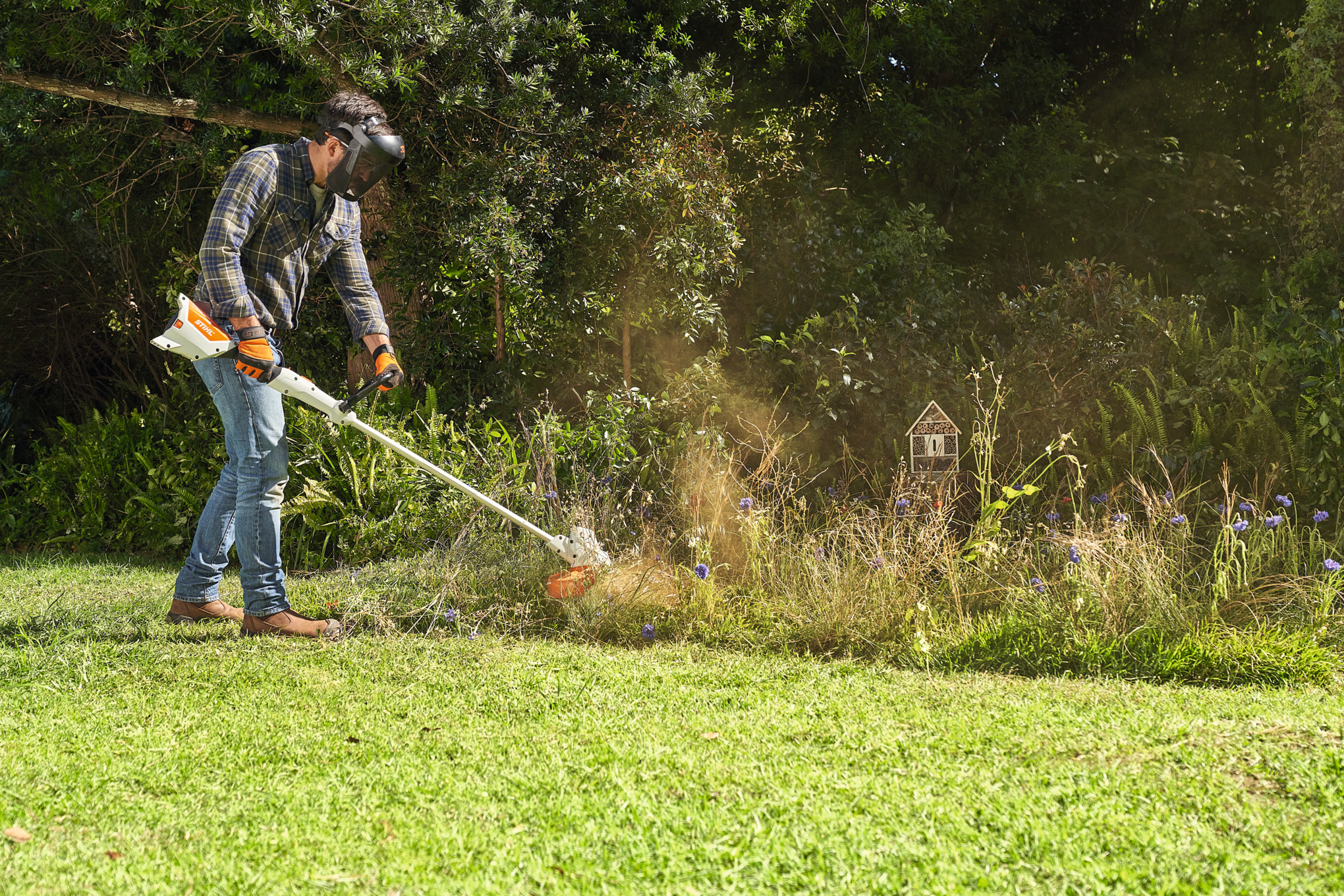
A STIHL cordless grass trimmer in action, maintaining a garden border.
Battery tools work best when your tools and battery platform fit your garden needs. Rather than focusing only on the tool type, it helps to think about the system: battery capacity, shared compatibility, and charging convenience.
Different gardens demand different runtimes. If you usually do short sessions like light trimming and quick edging, a moderate battery capacity may be enough. If you maintain a larger yard or often tidy after mowing, you will likely value higher capacity or having more than one battery so you can rotate during a longer session.
One of the best ways to stay efficient is to avoid swapping between incompatible chargers or batteries. A shared battery platform lets you move from trimming to clean-up without delays. It also helps you keep a consistent charging rhythm at home.
Efficiency comes from control and comfort. Consider whether the tool has settings you can easily adjust, how the grip feels, and how quickly it starts. For edging and trimming, balance and line feed or blade control can matter as much as raw power.
Many people start with one tool, then add others later. It can be more efficient to list your most common tasks. For example:
Once you see your routine clearly, choosing the right set of battery tools for efficient gardening becomes far easier.
Below is a simple process you can follow before and during a gardening session. It is designed to reduce time lost to searching, charging, or redoing work.
Check your battery readiness. Start by ensuring your main battery is charged and that you have a spare if your tasks usually take longer than expected.
Set up a clear work zone. Lay out tools, safety gear, and waste bags so you can keep moving without turning back and forth.
Start with easy clearing tasks. Begin by removing loose leaves or clippings. This improves visibility and makes trimming or edging cleaner.
Use the right tool for each stage. Trim first, then edge, then finish with a quick tidy. This order helps you avoid knocking debris back into areas you have already shaped.
Use power settings thoughtfully. If your tool has multiple modes, start at a level that is comfortable and effective. You can step up for thicker areas and return to a lower setting for lighter work.
Take short “battery checks.” If runtime feels tight, pause briefly to assess. Rotating to a fully charged battery can prevent uneven results.
Finish with a clean-up pass. Use a blower or vacuum-style tool for final tidying. A neat finish also makes storage and maintenance easier.
Store batteries safely. Keep batteries dry and protected from extreme heat. Clean the tool exterior and allow it to cool before storage.
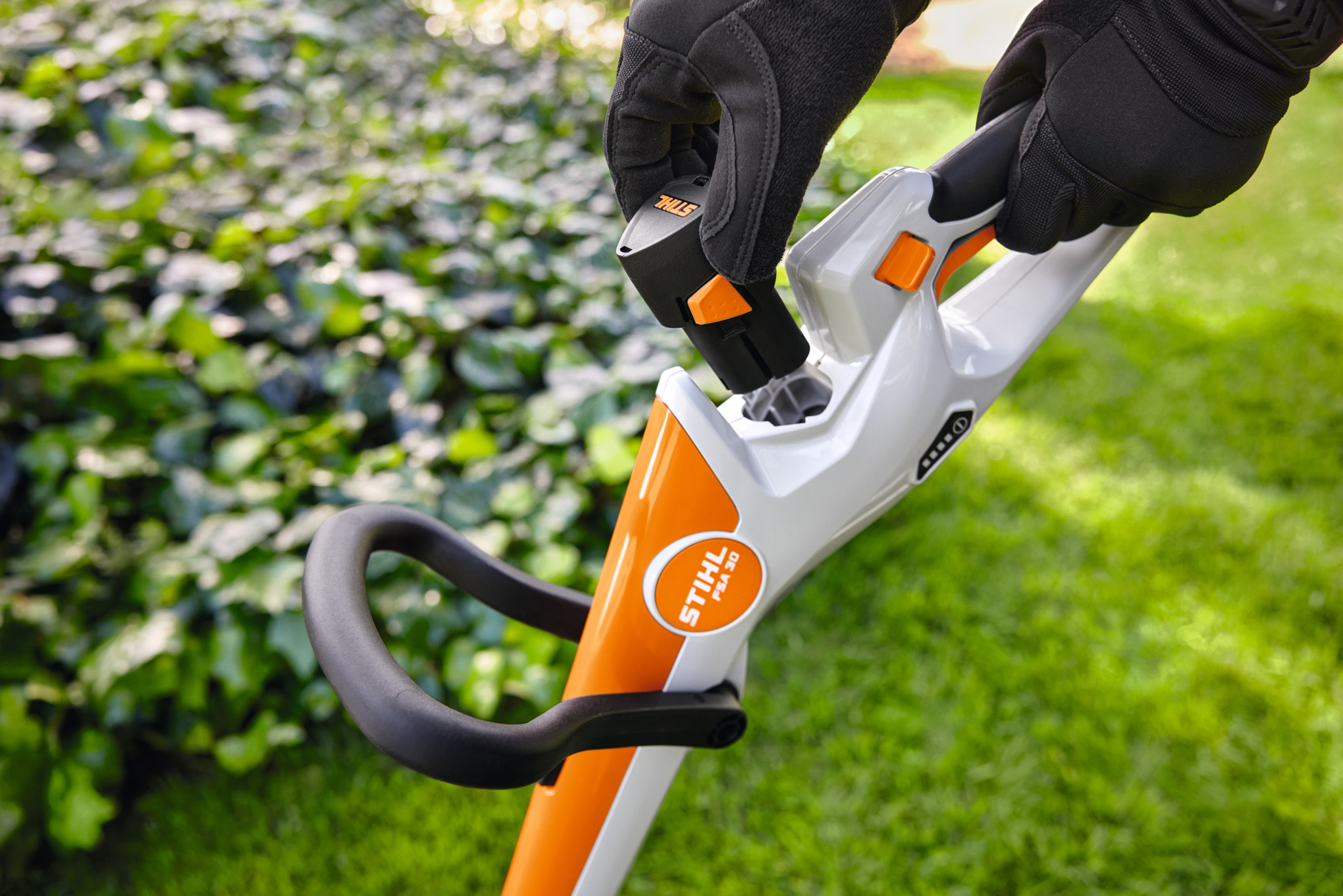
Fitting the battery to a STIHL FSA 30 cordless grass trimmer before use.
When I first began maintaining my yard more regularly, I kept reaching for the same approach: start with trimming, then realize I needed a better way to clear clippings and leaves. That meant I would stop mid-task, hunt for the right tool, and often end up doing a second round because debris had spread while I worked.
After switching to battery tools for efficient gardening, the biggest change was not only comfort. It was the flow. I could clear the surface first, then trim with less mess. I also found it easier to work in small sections. Instead of feeling “locked in” by a cord or limited by bulky equipment, I could move naturally from one edge to the next.
Over time, I also learned that having a spare battery reduces anxiety. Even when I do not fully drain the primary battery, having rotation as an option helps me finish the job with consistent results.
Once you have the tools, the workflow makes the difference between “I worked for an hour” and “the yard looks finished.” Here are practical habits that tend to improve efficiency.
Clearing the surface first helps you see edges, borders, and problem spots. It also reduces the chance of trimming over clippings that later blow into your freshly edged lines.
It can be helpful to start near walkways or areas you want to finish first. Then you gradually move into thicker growth. This approach often limits how much you disturb already-tidy sections.
Many gardening tasks go faster when your technique is repeatable. For trimming, maintain a steady angle. For edging, use controlled passes rather than rushing. This tends to reduce rework and helps conserve battery energy.
Battery tools generally last longer with basic care. Clean debris from vents, check attachments, and store tools properly. A tool that runs smoothly will feel more efficient each time you use it.
If you want to speed up clean-up after trimming, a battery vacuum cleaner can be useful for collecting leaves and dust from hard surfaces or garden corners. You may compare options such as battery vacuum cleaner models to find a good fit for your routine.
Battery tools can be a thoughtful way to make gardening feel faster and more enjoyable. When you choose a compatible battery platform, plan for your typical job length, and follow a simple workflow, you can reduce delays and rework. The goal is steady performance: start confidently, work in an order that keeps debris under control, and finish with a quick tidy so you can store tools and batteries without stress.
To make your next session smoother, consider these recommendations:
If you are exploring battery solutions further, you can also browse relevant selections on battery tool promotions to see current options that may fit your gardening routine.
Yes. Battery tools are often practical for trimming, edging, and everyday clean-up because they start quickly and let you move around without managing cords. For best results, it helps to match runtime to your typical session length and keep batteries ready for rotation.
If your gardening tasks are usually short, a smaller battery can be enough and easier to handle. If you tackle larger areas, do deeper clean-up, or work longer into the day, a larger capacity or an extra battery can help you avoid stopping mid-job.
Not necessarily. Many gardeners find efficiency improves when the tools share the same battery family. Using one platform can simplify charging, reduce clutter, and make it easier to keep momentum during a job.
A simple routine is to clear loose debris first, trim and edge in controlled passes, and then do a final clean-up pass with a blower or vacuum tool. This order helps prevent debris from reappearing on freshly shaped areas and often reduces repeat work.
Disclaimer: This article is for general information only. Always follow the manufacturer’s instructions, safety guidance, and maintenance recommendations for your specific battery tools. Results may vary based on garden size, vegetation thickness, and operating conditions.


Betontools Australia supplies over 20,000 items including complete range in Diamond Tools, Concrete Tools, Concrete Repair, Remedial Works, Bricklaying Tools, Tiling Tools, Rendering and Plastering Tools, Access Equipment including Ladders and Scaffolding, Industrial Tools, Power Tools, Laser Levels, Water pressure cleaners, and accessories. Shop with peace of mind and security knowing your item is fully backed up if anything goes wrong... So whether you're a seasoned Online Shopper or it's your first time, we promise to make each any every purchase a rewarding experience. If you have any questions or require any tools that are not listed in our store please feel free to contact us so we can assist you. Our aim is to earn your business, no gimmicks, and no tricks – Just our 100% customer commitment to sales and after-sales service.
{"one"=>"Select 2 or 3 items to compare", "other"=>"{{ count }} of 3 items selected"}